
Home solar · A planning story
Sunshine above the family terrace
A terrace can be a place for drying clothes, tending plants and catching the evening breeze. Planning solar here means making room for electricity generation without forgetting the life that already happens on the roof.
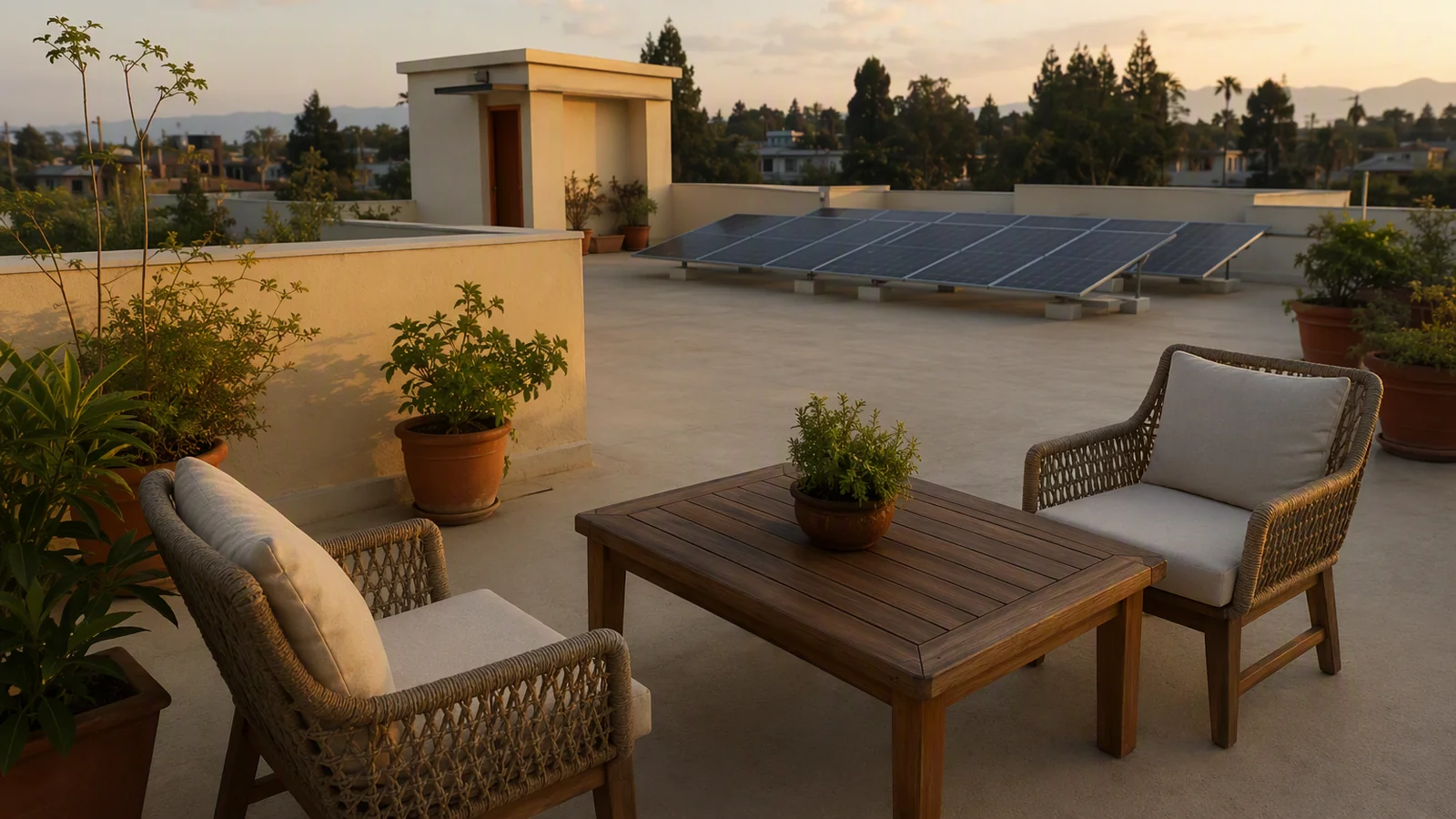
- Setting
- A shared-use family terrace
- Planning focus
- Daytime solar with room to move
- Everyday use
- Appliances by day; a separate plan after sunset
01 / brief
Keep the terrace part of the home
Start with a household that wants to explore solar but does not want its terrace to become inaccessible. The useful brief is not simply to cover every spare surface with panels. It is to understand the electricity bill, decide which roof areas must remain open and make a sensible distinction between daytime energy and backup power.
Ask everyone who uses the terrace what needs to stay: the route to the water tank, space for laundry, plant care and access for repairs. Write those needs alongside a recent set of bills. Together they form a more practical starting point than choosing a system size from the roof area alone.
02 / site considerations
Read the roof before drawing the array
A site visit should look beyond the clear patch visible at midday. Water tanks, parapets, stair enclosures and neighbouring buildings can cast shadows at different times. The survey needs to consider that changing shade, the roof’s condition and the routes that people and maintenance teams will need to use safely.
Discuss drainage and waterproofing before selecting a mounting approach. A qualified assessment should confirm structural suitability, while the electrical survey checks the connection, earthing and possible inverter location. Keep cable routes away from everyday foot traffic and agree how equipment can be reached for inspection without climbing over panels or blocking the terrace entrance.
03 / approach
Match the layout to the household rhythm
An on-grid option can be a starting point when the main goal is to use solar electricity during sunny hours. Compare the household’s daytime demand with the usable roof, not just its monthly bill. The proposal should explain equipment, layout, protections and the connection process, with assumptions clearly separated from any estimate of future generation.
Keep the backup question explicit. Standard on-grid solar does not supply the home during a grid outage. If selected appliances must stay on, ask for a separate discussion of a compatible backup arrangement. Compare the cost, space and maintenance implications before treating battery storage as part of the same decision.
04 / everyday use
Let sunny hours do some of the work
Where the household routine allows, a washing machine or other flexible appliance can run during daylight rather than late in the evening. This is a scheduling choice, not a promise that solar will cover every load. Cloud cover, seasonal conditions and the way appliances overlap all affect how much grid electricity may still be needed.
After sunset, an on-grid home continues to rely on the grid unless an appropriate storage arrangement is part of the design. Build safe access and periodic checks into the household plan too. Ask the installer to explain monitoring, cleaning precautions and who to contact if generation changes unexpectedly; do not step onto panels or attempt electrical repairs.
05 / next step
Bring the bill and the terrace wish list
For a first conversation, gather recent electricity bills, the property location and a few roof photographs taken from a safe position. Note water tanks, existing equipment and the areas the family wants to keep clear. A simple list of appliances used during the day helps turn a broad interest in solar into a useful survey brief.
Before proceeding, ask for a written scope that explains the proposed layout, equipment, installation responsibilities and any utility-related steps. Confirm current eligibility and connection requirements rather than assuming a scheme or approval applies. The next decision is whether the surveyed proposal fits the home, not whether a generic capacity sounds attractive.
Make it specific to your site
Start with your roof and your routine.
Share your location, electricity bill and priorities. A survey can establish what is suitable before you choose a system.
Plan a site survey