
Home solar · A planning story
A home with backup in mind
When the lights go out, the priority may be a fan, a few lamps and a working internet connection. A good solar conversation starts by naming those essentials, rather than promising to keep the entire home running.
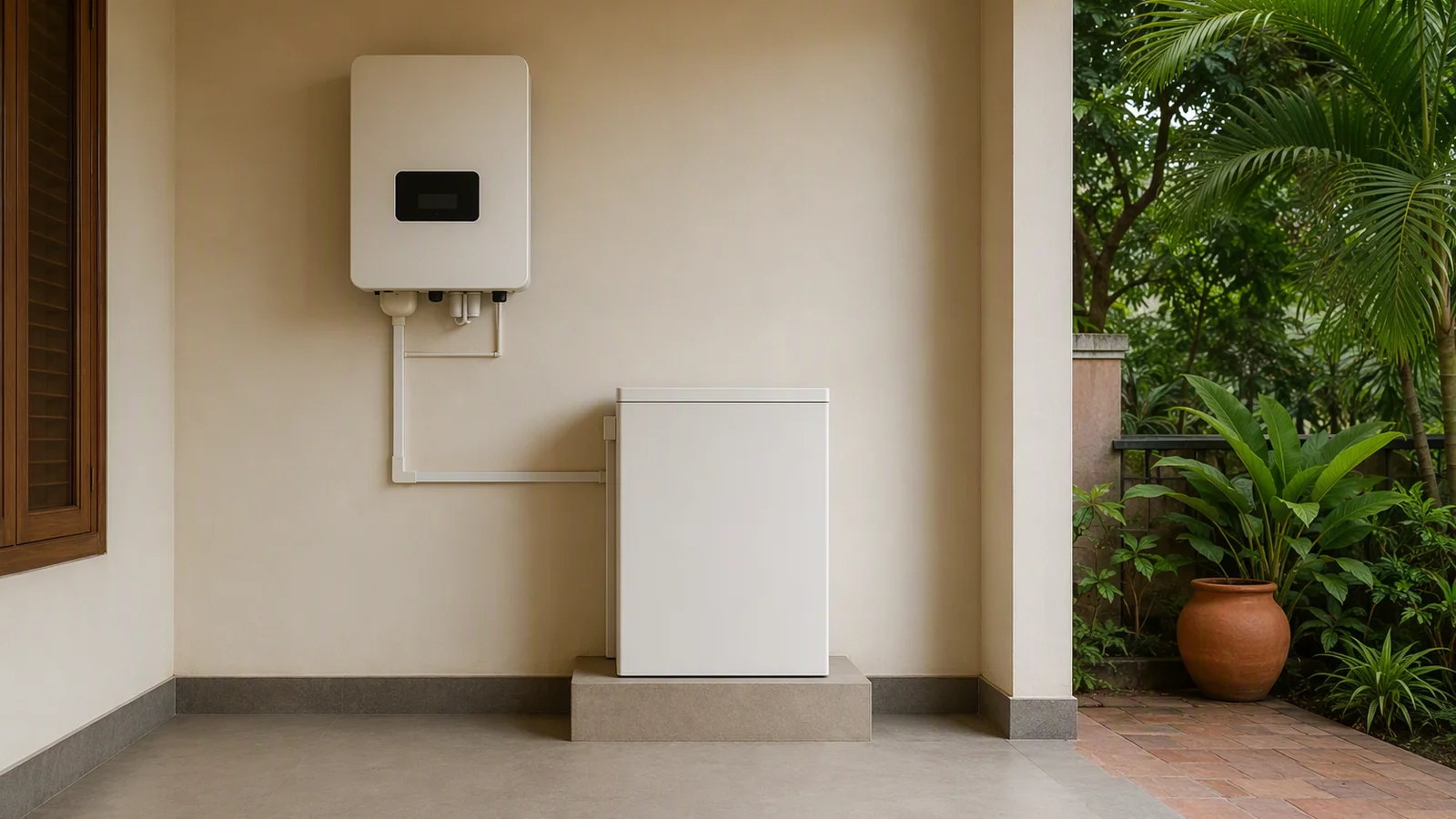
- Setting
- A home considering essential-load backup
- Planning focus
- Daytime energy and outage needs, assessed separately
- Everyday use
- Selected circuits within an agreed battery budget
01 / brief
Name the appliances that matter most
For a home where interruptions are a concern, start with the experience the household wants during an outage. Lights, fans and a router create a different requirement from air conditioning, cooking equipment or a water pump. The brief should list the essential appliances, their operating demand and how long they are expected to run.
Keep the daytime electricity goal beside that backup list. Rooftop generation and stored energy solve related but different problems. An existing inverter or battery should also be recorded, including its condition and specifications, so a qualified installer can assess compatibility rather than assuming that new solar equipment can simply be connected to it.
02 / site considerations
Make space for more than the panels
The roof still needs checks for shade, condition, structural suitability and safe access. Backup planning adds another set of questions indoors or in a suitable sheltered equipment area. The battery and inverter need locations that meet the selected manufacturer’s instructions, with appropriate clearances, environmental protection and access for qualified maintenance.
Ask the electrical survey to identify the circuits intended for backup and the protection and changeover arrangements they require. Keep equipment away from escape routes and places vulnerable to flooding or casual interference. A neat-looking corner is not enough: installation requirements, battery chemistry and the building’s electrical condition must determine whether a location is suitable.
03 / approach
Design around essential circuits, not promises
Compare an on-grid design with an appropriately specified hybrid or other compatible backup arrangement. Standard on-grid solar shuts down during a grid outage; panels alone do not provide outage protection. Ask the proposal to explain which circuits can be supplied, how transfer works and what happens when battery charge reaches its operating limit.
Battery capacity and inverter power are separate checks. Running time depends on the connected load, usable stored energy, system settings and equipment condition, while some appliances also have a starting surge. Request an explained load calculation and product-specific limitations. Avoid a whole-home backup claim unless the actual appliances, wiring and operating requirements have been assessed.
04 / everyday use
Keep the backup plan easy to live with
During a power cut, the household should know which sockets and lights belong to the backup circuits and which appliances must remain off. A labelled handover and a straightforward operating explanation are more useful than a long list of technical features. Any medical or other safety-critical requirement needs specialist planning rather than reliance on a general household solar proposal.
On ordinary days, the system’s behaviour depends on its design and settings: available solar, grid supply and battery reserves may be managed differently. Ask how the chosen settings balance daytime use with the desired outage reserve. Check monitoring and maintenance guidance, and understand that cloudy weather or a long interruption can leave less energy available than expected.
05 / next step
Take an essential-load list to the survey
Gather electricity bills and a list of essential appliances, including their ratings where available. Record the interruptions that matter to the household and the desired backup duration without treating that wish list as a guaranteed result. Photographs and model details of any existing inverter or battery can help the team prepare for a safe compatibility assessment.
Ask for a proposal that separates the rooftop system, battery equipment, circuit changes and ongoing care. Confirm warranty conditions, service arrangements and the limitations of the selected configuration before choosing it. Comparing those details makes it easier to decide whether backup is a priority now, a later option or a requirement better met by another arrangement.
Make it specific to your site
Start with your roof and your routine.
Share your location, electricity bill and priorities. A survey can establish what is suitable before you choose a system.
Plan a site survey