
System sizing · West Bengal
3 kW vs 5 kW solar in West Bengal: choosing for a Siliguri home
Choose between 3 kW and 5 kW rooftop solar using actual electricity units, daytime use, roof shade and a documented site assessment.
The short answer
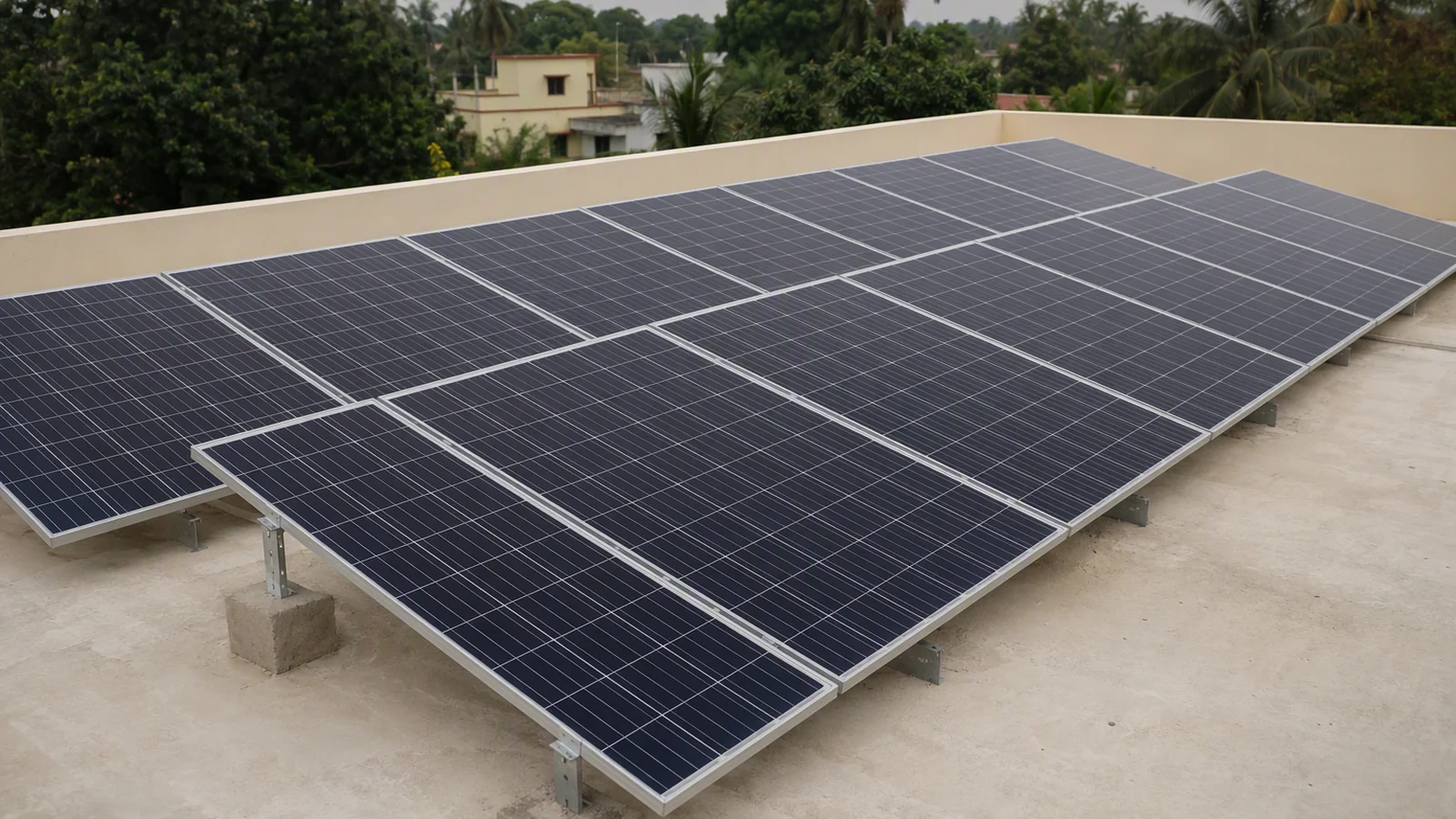
Neither 3 kW nor 5 kW is automatically right for a home in Siliguri or elsewhere in West Bengal. Compare actual kWh on your bills, daytime demand, planned appliances and usable unshaded roof space. Ask for a site-specific design and stated assumptions, not a generation or savings guarantee.
Read units before the bill amount
Collect electricity bills from different seasons and record actual kWh consumed. Keep billing periods visible so that unequal periods are not compared as though they were identical. Note changes in occupancy or appliance use. Electricity consumption is a core input to solar planning.[2] The amount paid alone does not tell a designer when or how your household uses electricity.
Explain when the home uses power
Tell the surveyor whether people are home during daylight and when pumps, cooling and other large appliances run. Mark regular night use separately. Ask the designer to show the assumptions about electricity used directly at home and electricity exchanged with the grid. Do not accept a proposal that treats all household use as daytime demand or assumes all exports have equal value.
Compare both options on the same basis
Ask for a 3 kW and a 5 kW option using the same roof survey and consumption records. Each should explain the layout, equipment, electrical work and capacity rationale. Ask what problem the larger option addresses. If future demand is the reason, list the planned appliances and their likely operating patterns instead of relying on a vague statement that bigger is better.
Check usable roof space and shade
Roof size, shape, condition and shade affect suitability for solar.[2] Ask for a layout that shows obstructions, access space and shaded areas rather than just the roof's total area. In your Siliguri survey, flag nearby buildings, trees, tanks and planned construction. Let qualified personnel assess structural suitability; do not climb onto an unsafe roof to collect measurements.
Considering how solar could fit a shared-use terrace? Explore a family-terrace planning brief
Keep capacity separate from predicted energy
A proposed system rating is not a promise of the electricity it will produce. Ask for the inputs behind any energy estimate, including the assessed roof conditions, and have the installer distinguish an estimate from a guarantee. Compare those estimates with actual household kWh records. Keep any backup requirement separate: ask which equipment and circuits the proposed backup scope would cover.
Check the connection before committing
WBSEDCL provides rooftop solar application information for its consumers.[1] Confirm your electricity distributor and ask which application steps apply to your connection. Request written clarification of capacity acceptance, metering and billing treatment before relying on them in a comparison. Keep the technical size decision separate from any household subsidy eligibility check or sales promise.
Common questions
Does a larger home always need 5 kW?
No. Floor area does not replace measured electricity use. Prepare bills and appliance schedules, then ask the designer to explain the capacity using your demand and roof assessment.
Can I choose from one high electricity bill?
Avoid relying on a single unusual period. Share seasonal bills and explain temporary events, guests or equipment changes so that the comparison reflects normal use.
What if most electricity is used at night?
Make that clear before design. Ask for a comparison using your actual usage pattern and confirmed billing treatment. If considering storage, request its scope and ownership costs separately.
Sources and checks
- [1] WBSEDCL: rooftop solar application information for utility consumers
- [2] U.S. Department of Energy: Homeowner's Guide to Solar — general consumption and roof considerations; not West Bengal prices or regulations
Confirm current utility and scheme rules before purchase.
General technical references are not West Bengal approval rules.
Your next step
Check your home solar fit
Costs and planning
Solar panel cost in Siliguri: what should a quote include?
System choices