
Business solar · A planning story
Solar alongside a hotel’s working day
A hotel never has just one energy routine. Guest rooms, reception, laundry and kitchen services follow different schedules. Solar planning works best when those routines are understood before a rooftop layout is proposed.
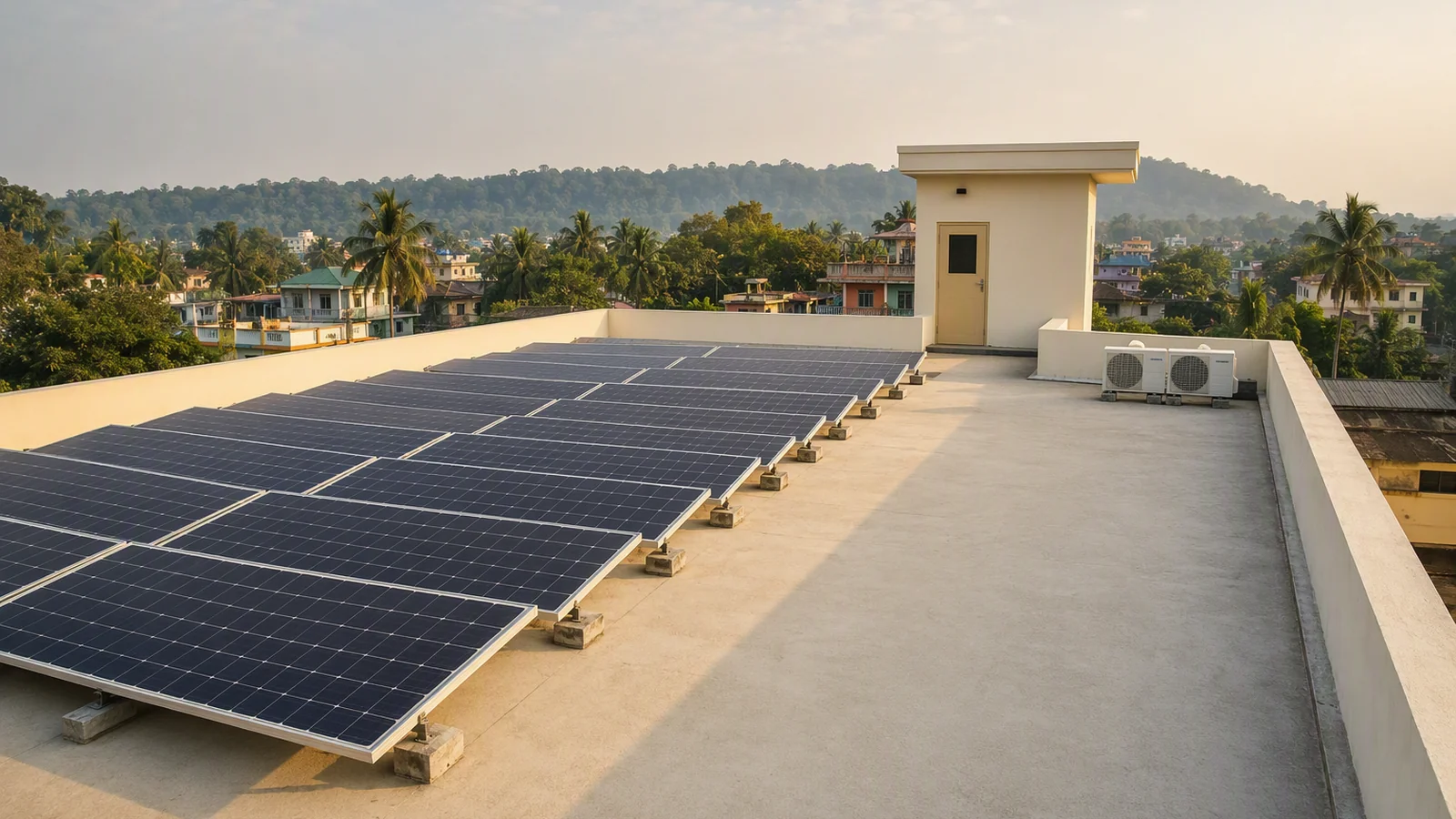
- Setting
- A hotel balancing guest and service needs
- Planning focus
- Daytime demand and rooftop equipment clearances
- Working day
- Hotel services; essential-load backup assessed separately
01 / brief
Put guest comfort at the centre of the brief
For a hotel considering rooftop solar, begin with the services that shape electricity use throughout the day. Reception, laundry, kitchen equipment, pumps and cooling may have different peaks. Occupancy and season can change that pattern again. A useful brief records those differences instead of assuming that the entire monthly bill represents steady daytime demand.
Guest comfort also makes reliability a separate requirement. Identify services that must remain available during interruptions and review the existing backup arrangement with qualified professionals. Solar generation may contribute during daylight, but it should not be presented as a guarantee that guest rooms or essential hotel systems will keep running through a power cut.
02 / site considerations
Leave room for a roof that already works hard
Hotel roofs often carry tanks, cooling equipment, ducts and service routes. Map them before discussing panel coverage. Consider shade through the day, access for equipment replacement and the space needed for safe maintenance. The layout must respect drainage and the building’s safety requirements rather than squeezing panels into every visually open area.
A qualified structural and electrical assessment should establish suitability and identify any repairs needed first. Discuss cable routes, inverter location and how installation activity could affect guests or staff. Roof access, deliveries, noise and planned electrical shutdowns all need coordination with the hotel’s operating team before a programme of work is agreed.
03 / approach
Separate daytime contribution from round-the-clock needs
Assess available load data across busy and quiet periods, and compare it with the proposed generation profile. Where laundry or other flexible services can operate during daylight without affecting guests, that may help align demand. The system proposal should still reflect the hotel’s actual service schedule, not an idealised routine that staff cannot maintain.
Review existing generator, battery or other backup equipment as part of the electrical design. Standard on-grid solar stops supplying during a grid outage. Any proposal for coordinated operation or storage needs an explicit technical scope, operating limits and suitable protections. Keep those costs and responsibilities visible rather than folding them into a vague promise of uninterrupted power.
04 / everyday use
Make monitoring part of the facilities routine
In normal operation, the facilities team should know how to review generation and spot a change that needs attention. Compare readings in context: weather, occupancy and equipment use all vary. A sunny day with low occupancy can look different from a cloudy day with a full hotel, so a single bill is not enough to judge performance.
Agree a maintenance approach that protects guests, staff and technicians. Keep roof access controlled, record who handles service calls and plan inspections around the hotel’s needs. If new cooling equipment, extra rooms or changed kitchen services alter demand, revisit the assumptions behind the solar plan instead of expecting the original design to cover every future change.
05 / next step
Bring operations and facilities into one conversation
Prepare electricity bills covering different occupancy periods, the main equipment list and details of the existing electrical and backup systems. Invite someone who understands the hotel’s daily operation to the survey. Their knowledge of guest services, maintenance access and acceptable work windows is as important to the brief as the roof dimensions.
Ask for a proposal with a clear rooftop layout, equipment and connection scope, installation coordination plan and service responsibilities. Confirm which assumptions underpin any forecast and what is excluded. A considered next step is a design review with the hotel team, so the eventual decision supports the building’s operations rather than adding an avoidable complication.
Make it specific to your site
Start with your roof and your routine.
Share your location, electricity bill and priorities. A survey can establish what is suitable before you choose a system.
Plan a site survey