
Business solar · A planning story
A warehouse roof, a daytime opportunity
Packing, lighting and dispatch can make the working day a useful place to start a solar assessment. The important question is not how many panels fit on the shed, but how the roof and the operating schedule work together.
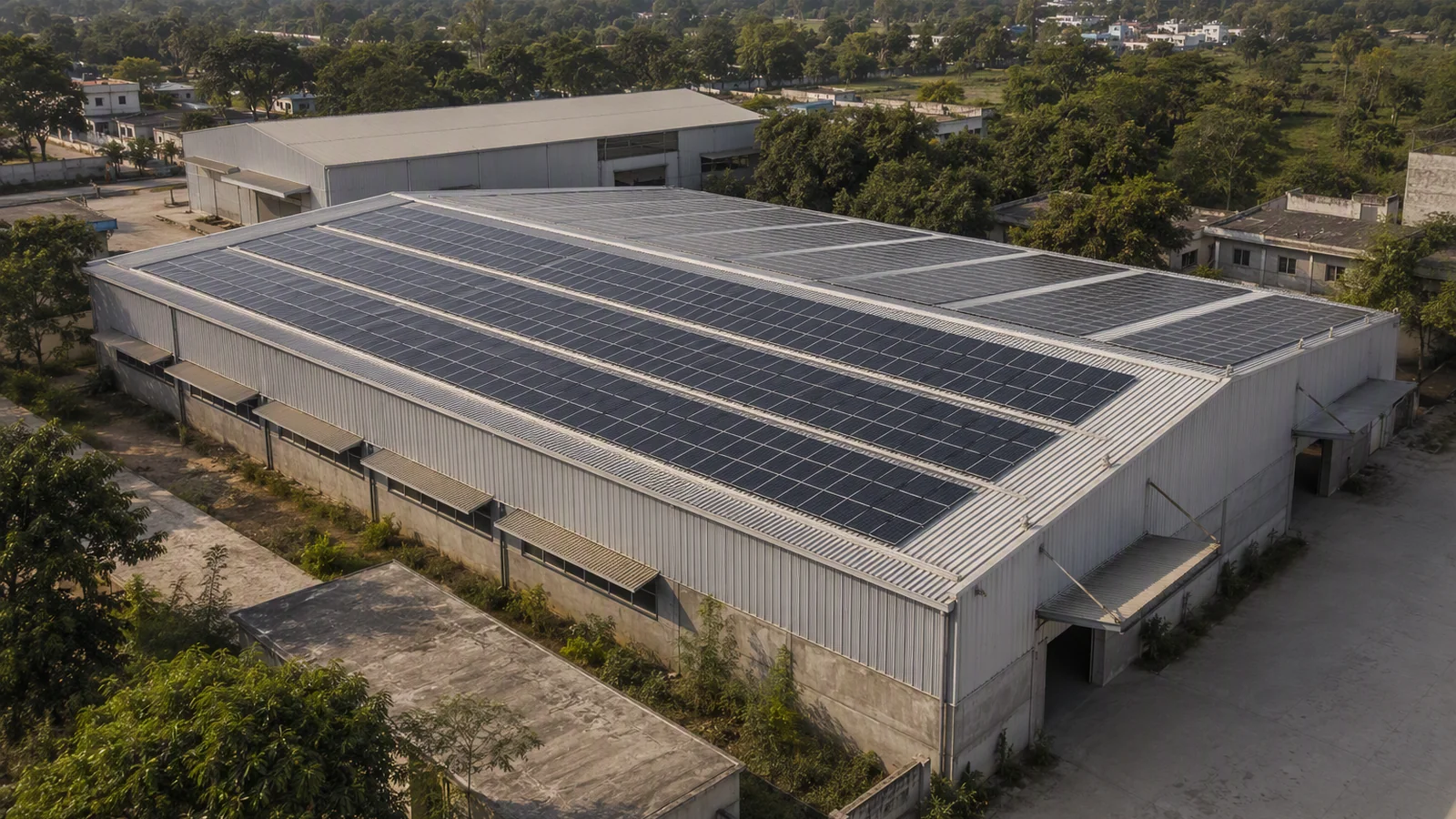
- Setting
- A warehouse with daytime operations
- Planning focus
- Roof suitability and demand during working hours
- Working day
- Lighting, packing and dispatch loads
01 / brief
Start with the working day, not the roof size
A warehouse with regular daylight activity offers a clear planning question: how much of its demand occurs while solar could be generating? Begin with operating hours, recent electricity bills and the equipment used for lighting, packing, ventilation and handling. Note quieter days, seasonal peaks and any activities that move into an evening shift.
A large roof does not automatically justify a large system. The useful brief brings together energy use, roof ownership, building plans and the business’s investment priorities. Where several tenants or meters share a site, establish which connection and authorised roof area are being assessed before a layout or commercial proposal is developed.
02 / site considerations
Treat the shed roof as a working structure
An industrial roof needs a qualified assessment of its structure, covering and fixing condition before equipment is added. The survey should consider corrosion, leaks, drainage, wind exposure and any repair or replacement plans. Fragile roof areas and skylights require particular care; photographs from the ground do not establish that the roof is safe to walk on.
Plan maintenance routes, fall protection and access without compromising fire-safety provisions or the building’s operations. Electrical checks should cover the connection, cable paths, protection and a suitable inverter position. If roof repairs are likely, address their timing before solar design progresses so that a proposed array does not make necessary building work harder.
03 / approach
Compare generation with demand across the week
Use available interval data or an appropriate load assessment to understand the demand profile rather than relying only on a monthly total. Compare working days with weekends and shutdown periods. A proposal should explain how the chosen array relates to that pattern and identify the assumptions behind any generation or financial estimate.
Confirm connection and metering requirements with the relevant utility before relying on exported energy in the business case. Standard on-grid solar is not a substitute for outage backup. If the site uses a generator or other backup equipment, ask for a qualified design review of the operating arrangement and required controls, not an informal promise of compatibility.
04 / everyday use
Fit solar around a safe, predictable operation
During suitable daylight conditions, generation can contribute to the site’s electrical demand. The actual contribution changes with weather, season and the warehouse’s activity. Moving a flexible task into daylight may help align demand, but production and dispatch commitments should remain the starting point rather than being reshaped around an assumed daily output.
Give monitoring and maintenance a clear owner within the business. Agree how unusual readings are reported, who can isolate equipment and how authorised technicians access the roof without disrupting dispatch. Include roof inspections and safe cleaning arrangements in the operating plan, and keep changes to loads or working hours visible to whoever reviews system performance.
05 / next step
Prepare a site brief the team can price properly
Bring recent bills, operating hours, available demand data and roof drawings if they exist. Identify the person responsible for the building and the electrical installation, and flag lease conditions or planned repairs. A safe site survey can then test whether the roof and connection support the business’s intended approach.
Request a written proposal that separates equipment, roof-related work, electrical work, connection responsibilities and service scope. Review generation assumptions, any export assumptions and ongoing costs rather than comparing headline prices alone. The decision should rest on a site-specific design and documented commercial assumptions, with any projected return treated as an estimate rather than an achieved outcome.
Make it specific to your site
Start with your roof and your routine.
Share your location, electricity bill and priorities. A survey can establish what is suitable before you choose a system.
Plan a site survey