Guides · West Bengal
Rooftop Solar for Hotels and Homestays in Darjeeling and Kalimpong: 2026 Guide
Rooftop solar for hotels and homestays in Darjeeling and Kalimpong: hill design tips, WBSEDCL rules, battery backup and the 31 Dec 2026 ALMM date.
The short answer
Yes, rooftop solar can work well for hotels and homestays in Darjeeling and Kalimpong if it is designed for the hills. A proper site survey must check shade, roof strength and wind. Hotels can connect through WBSEDCL net metering, and a battery can add backup for power cuts. Businesses do not get the PM Surya Ghar subsidy. [1]
Why are hotels and homestays in Darjeeling and Kalimpong looking at rooftop solar?
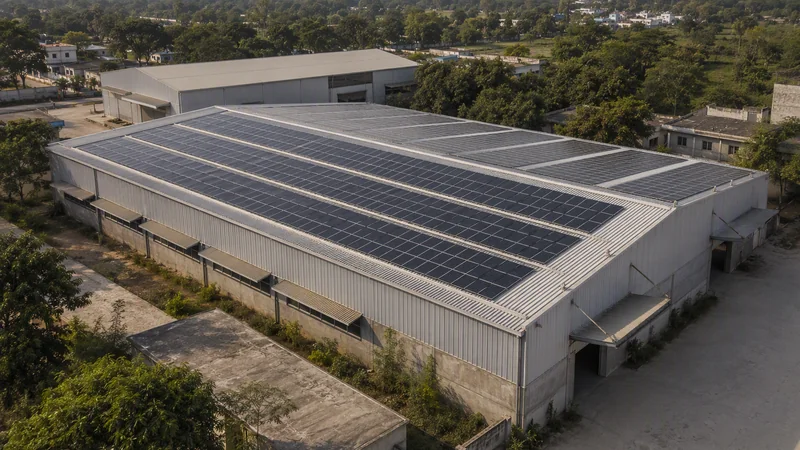
A hotel uses power all day and all night. Geysers, room heaters, lights, kitchen equipment, laundry and water pumps all add to the bill, and the bill gets heavier in the busy tourist season. Rooftop solar lets the hotel make part of its own power on its own roof. Under the West Bengal rooftop solar rules, a grid-connected system can run on net metering, where the solar units sent to the grid are subtracted from the units taken from the grid [1]. In simple words, your roof works for you during the day and the grid fills the gap at night. For a hotel, resort or homestay in Darjeeling, Kalimpong, Mirik or Kurseong, this can bring steady savings on the electricity bill for many years. The exact saving depends on your tariff category, your load and how much clear roof space you have, so it must be worked out from your own bills during a site survey.
Does rooftop solar work well in the hills?
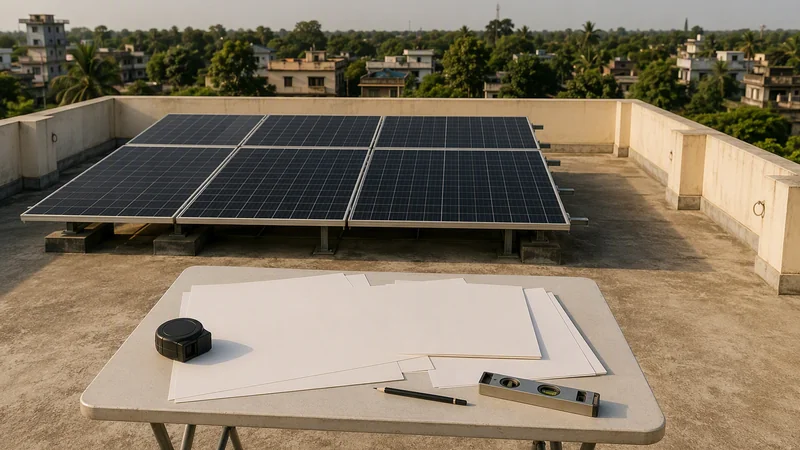
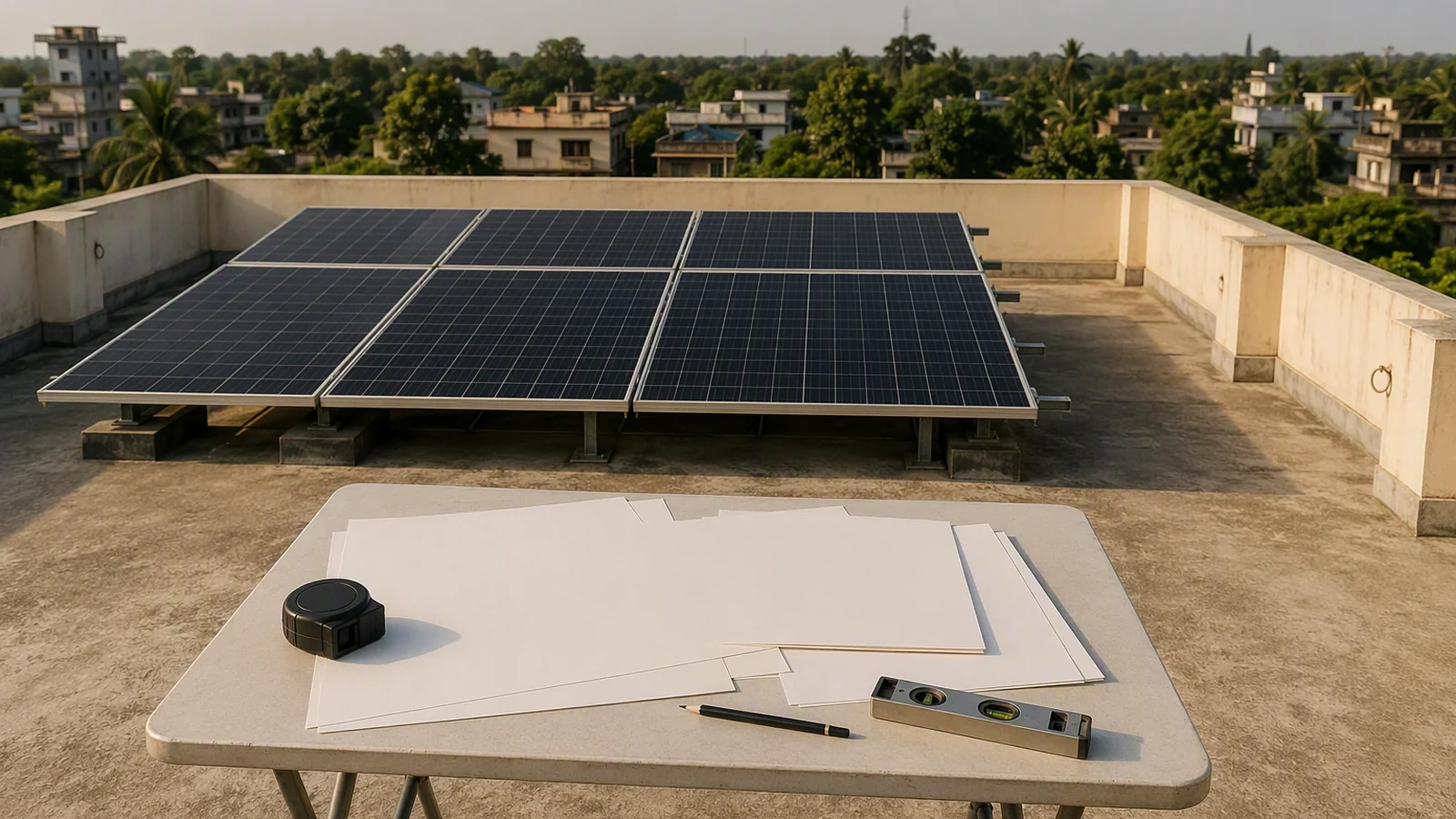
It works, but the hills need more careful design than the plains. First, shade. Hill towns are built on slopes, and nearby buildings, water tanks, trees and the hillside itself can block the sun for part of the day. Even a little shade on one panel can cut the output of a whole string, so the survey must map shade across the day. Second, roof space. Many hotels have small or stepped roofs, so panel layout must be planned panel by panel. Third, wind. Exposed roofs on ridges face strong winds, so the mounting structure, bolts and anchoring must be designed for that load. Fourth, weather. Fog, mist and the long monsoon reduce output in some months, so the yearly estimate should not be based on a clear winter day. Fifth, access. Material must travel on narrow hill roads, so delivery and lifting must be planned in advance. An installer who knows these conditions will give you a realistic design, not just a brochure number.
On-grid, hybrid or battery: which suits a hotel?
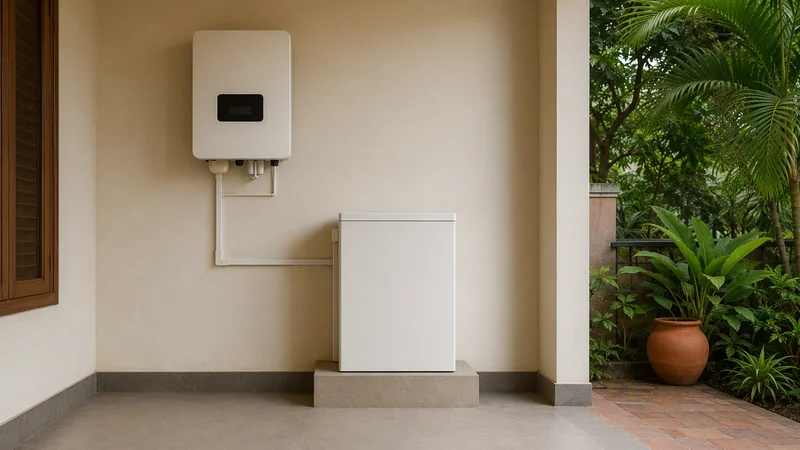
An on-grid system is the simplest. It cuts your bill, but it switches off during a power cut for safety, so it gives no backup. A hybrid system adds a battery, so key loads like reception, Wi-Fi, CCTV, some lights and the kitchen can keep running when the grid fails. For larger hotels, a battery energy storage system (BESS) can store solar power and support the property in the evening. Battery storage is getting more attention in India's rooftop policy talks. An October 2026 analysis by the think tank Ember noted that the Central Electricity Authority has suggested distribution companies could require two hours of storage with rooftop systems [3]. This is only a suggestion and not a rule today. For a hotel, the right choice depends on how often you face power cuts, which loads must stay on, and your budget. Many hotels start with on-grid solar and keep space in the design to add a battery later.
What are the WBSEDCL rules and fees for a hotel's rooftop system?
Rooftop solar in West Bengal follows the WBERC Grid Interactive Rooftop Solar PV System for Prosumers Regulations, 2025, which came into effect on 31 July 2025 [1]. A prosumer is a consumer who also produces power. The rules allow three ways to connect: net metering, net billing and gross metering. In net billing and gross metering, the exported units are paid at a feed-in tariff set by the Commission [1]. Systems up to 10 kW are accepted automatically, while larger systems need a technical feasibility study by the distribution company [1]. The application fee is ₹1,000 for low and medium voltage consumers and ₹5,000 for high and extra-high voltage consumers, and the distribution company should respond within 20 days [1]. The consumer pays for any new network work that is needed [1]. Most hotels will need more than 10 kW, so plan for the feasibility step. Tariff rates are revised by WBERC from time to time, so check your latest bill and the current tariff notice on the WBSEDCL website before working out savings [2].
Why does the 31 December 2026 ALMM date matter for hotels?
ALMM is the government's approved list of solar panel and cell makers. List-II covers solar cells. On 18 July 2026, MNRE allowed net metering and open access projects to be commissioned without the List-II cell condition until 31 December 2026 [4]. Projects commissioned after that date must follow List-II, and MNRE said this is a one-time window, not a blanket extension [4][5]. The date that counts is the commissioning date, not the order date. This matters because panels made with Indian cells currently cost more. Mercom India reported on 26 October 2026 that the widening price gap between DCR and non-DCR modules is raising rooftop installation costs and lengthening payback periods [6]. A hotel in Darjeeling or Kalimpong that is already planning solar should get its survey and design done soon. But do not rush and cut corners on structure or safety. No installer can guarantee a WBSEDCL approval date.
What should a hotel owner check before signing, and why choose a local installer?
Ask for these in writing: the exact panel and inverter model numbers, the shade study, the structure design for wind, the earthing and lightning protection plan, who files and follows up the WBSEDCL net metering application, the planned commissioning date, the warranty terms, and the after-sales service plan. In the hills, service matters as much as the sale. A fault in peak season can cost you guests, so you need a team that can reach you quickly. Brijstar Green Energy is a solar EPC company based in Siliguri, working for businesses across North Bengal, Sikkim and beyond. We handle the site survey, design, WBSEDCL net metering liaison, installation, commissioning and after-sales service. Brijstar is an authorised channel partner of Tata Power Solar and also offers other leading brands for commercial clients, along with battery storage (BESS) and EV charging for businesses. To find out what solar can do for your hotel or homestay in Darjeeling, Kalimpong or anywhere in the hills, book a free site survey with Brijstar — call or WhatsApp +91 99324 08999, or visit brijstar.com.
Common questions
Can a hotel in Darjeeling get the PM Surya Ghar subsidy?
No. PM Surya Ghar subsidy is for individual homes. Hotels, resorts and other businesses do not get it.
My homestay is part of my own house. Which rules apply?
It depends on your electricity connection and how the property is used. Share your latest WBSEDCL bill with us and we will check what applies before you decide.
Will solar work in the monsoon and foggy months?
Yes, but output will be lower on cloudy days. A good design estimates generation across the whole year, not just on clear days.
Will an on-grid system keep my hotel running during a power cut?
No. On-grid systems switch off during a grid failure for safety. You need a hybrid system or battery storage for backup.
How long does WBSEDCL take to approve a hotel's rooftop system?
Under the 2025 rules the distribution company should respond within 20 days, and systems above 10 kW need a feasibility study. Actual timelines can vary, so no one can guarantee a date. [1]
Sources and checks
- [1] SolarQuarter – West Bengal issues new rules to boost rooftop solar for prosumers from July 31, 2025 (WBERC Regulations 2025)
- [2] WBSEDCL – Tariff Notification page
- [3] ESS News – India rooftop solar subsidy could unlock up to 25 GWh of battery storage (26 Oct 2026)
- [4] Business Standard – Govt extends exemption for net metering, open access RE projects till Dec (18 Jul 2026)
- [5] TaiyangNews – MNRE grants ALMM relief for net-metering, open access (20 Jul 2026)
- [6] Mercom India – DCR module premium raises rooftop solar affordability concerns (26 Oct 2026)
Confirm current utility and scheme rules before purchase.
Your next step
Check your business site