Commercial · West Bengal
Rooftop Solar for Tea Factories in Jalpaiguri and Alipurduar (Dooars): 2026 Guide
Rooftop solar for tea factories in Jalpaiguri and Alipurduar: savings on WBSEDCL bills, net metering rules, the 31 Dec 2026 ALMM deadline and tax benefit.
The short answer
Rooftop solar on a tea factory in Jalpaiguri or Alipurduar replaces grid power that costs about ₹6.92 a unit or more for WBSEDCL industrial consumers, mostly in daytime working hours. Keep the system within your contract demand, choose net metering (up to 500 kW) or net billing, and try to commission before 31 December 2026, when stricter ALMM cell rules start.
Why are tea factories in the Dooars looking at rooftop solar?
Power is a big cost for tea gardens in North Bengal. In May 2026, the Indian Tea Planters' Association and the Terai Indian Planters' Association asked the state for lower power tariffs, saying gardens from Darjeeling to Alipurduar face rising fuel, wage and input costs, with an average production cost of about ₹200 per kg of tea [1]. A factory cannot change the grid tariff, but it can make part of its own power. Withering fans, rollers, sorting machines and lights run mostly in the day, which is exactly when solar panels produce. One energy study of a tea garden in Jalpaiguri district put electricity use at about 0.90 units per kg of CTC tea [2]. So a factory making 10 lakh kg a year may use around 9 lakh units, and every unit made on the roof is one unit less bought from the grid.
How much can a tea factory save on its WBSEDCL bill?
Solar mainly cuts the energy charge, which is the per-unit part of your bill. In the WBSEDCL tariff gist for 2025-26, LT industrial consumers of 50 kVA and above pay an energy charge of 692 paise (about ₹6.92) per unit, plus a demand charge of ₹270 per kVA per month [3]. Under time-of-day billing, the evening peak rate is higher than the daytime rate [3]. Electricity duty and other charges come on top. Solar does not remove the demand charge, because that is linked to your contract demand, so do not expect a zero bill. The fair way to judge savings is simple: take the energy charge on your own bill and multiply it by the units solar will produce in a year. A proper site survey gives you that unit estimate for your roof, shading and load pattern.
Net metering, net billing or gross metering: which suits a tea factory?
Under the WBERC rooftop solar regulations of 2025 and WBSEDCL's procedure, the system size cannot be more than your contract demand or sanctioned load [4]. Net metering is allowed for systems from 1 kW up to 500 kW (or your contract demand, if lower). Exported units are set off against units you import, and any surplus resets to zero at the start of each financial year [4]. Net billing and gross metering are open up to your contract demand. In net billing, exported units are paid at a feed-in tariff, which for 2025-26 is ₹4.37 per unit for LT and MV, ₹3.89 for HV and ₹3.73 for EHV, against your normal import tariff [4]. This matters for tea. If your factory runs lighter in the winter months, surplus units under net metering may lapse on 1 April. A good design sizes the plant to your real season-wise load, or picks net billing so off-season exports still earn money. Systems above 170 kW connect at 11 kV or above [4].
What is the 31 December 2026 ALMM deadline, and why should factory owners act now?
ALMM is the government's approved list of solar manufacturers. List-I covers modules and List-II covers solar cells. In July 2026, MNRE said net-metering and open access projects commissioned on or before 31 December 2026 are exempt from the List-II cell rule. From 1 January 2027, these projects must use panels made with cells from List-II makers [5]. In simple words, after that date the choice of allowed panels gets narrower. If you want the wider choice, your plant must be commissioned, not just ordered, by 31 December. WBSEDCL's own process has set steps for feasibility, clearance, installation and meter fitting [4], so a factory that wants to make this window should start the survey and application now. No installer can promise the date, because approvals and meter fitting depend on WBSEDCL.
What tax benefit does a business get on solar?
A business that owns its solar plant can usually claim depreciation of 40% a year on the written-down value under the Income-tax Rules [6]. If the plant is used for less than 180 days in the year it is commissioned, only half of that rate (20%) is allowed for that first year [6]. This lowers the effective cost of the plant over the first few years. Tax rules differ by company structure, and the new Income-tax Act, 2025 applies from FY 2026-27 [6], so confirm the exact benefit with your chartered accountant before you plan around it. Note that the PM Surya Ghar subsidy is only for homes. Tea factories and other businesses do not get it.
What does the WBSEDCL approval process look like?
Under WBSEDCL's procedure, you apply online or offline with Form S1. A technical feasibility visit is due within 15 days, and the go-ahead with a quotation for the net meter within 20 days of applying [4]. You then pay the quotation, install the plant and submit the installation certificate (Form S5) and the electrical inspector clearance or self-certificate (Form S6). WBSEDCL inspects, signs the agreement, fits the meters and synchronises the system [4]. The application fee is ₹1,000 for LT and MV connections and ₹5,000 for HV and EHV [4]. Panels and inverters must meet the required tests and safety rules, including anti-islanding protection. These are the timelines in the procedure. Actual time can be longer at busy offices.
Why choose a local installer for a tea factory in North Bengal?
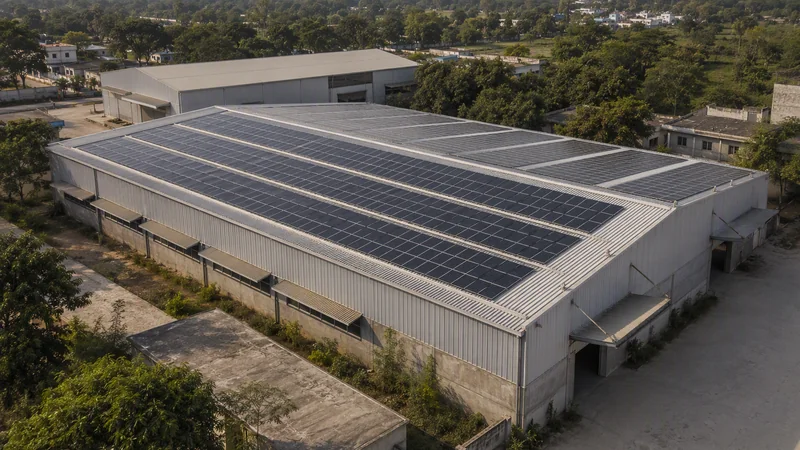
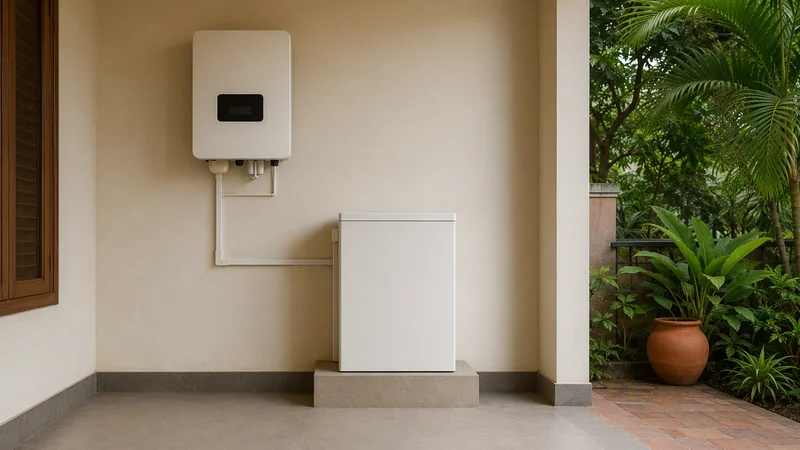
Tea factory roofs are large sheet roofs, often on older sheds, and the Dooars gets heavy monsoon rain and strong winds. The structure, the roof sheets and the walkways for cleaning all need checking before any panel goes up. Tea dust also settles on panels, so the cleaning plan matters. Brijstar Green Energy is a solar EPC company based in Siliguri, working across Jalpaiguri, Alipurduar and the rest of North Bengal. We do the site survey and load study, design, installation and commissioning, handle the WBSEDCL net metering or net billing paperwork, and give after-sales service. For commercial clients we offer leading module brands, including Tata Power Solar, and we also offer battery storage (BESS) for factories that want backup during power cuts. To check what solar can do for your factory, book a free site survey with Brijstar: call or WhatsApp +91 99324 08999, or visit brijstar.com.
Common questions
Can a tea garden get the PM Surya Ghar subsidy for its factory?
No. PM Surya Ghar subsidy is only for individual homes. Tea factories and other businesses do not get it, but they can claim tax depreciation on the plant.
What is the largest solar plant a tea factory can install under WBSEDCL rules?
The plant cannot be bigger than your contract demand or sanctioned load. Net metering is allowed up to 500 kW; above that, use net billing or gross metering. [4]
Will solar bring my factory electricity bill to zero?
No. Solar cuts the per-unit energy charge for the units it replaces. Demand charges and some other charges stay, as they are linked to your contract demand. [3]
What happens to extra units in the off-season?
Under net metering, surplus units carry forward within the year but reset to zero at the start of each financial year. Under net billing, exported units are paid at the feed-in tariff. [4]
Do I need to commission before 31 December 2026?
Not compulsory, but net-metering projects commissioned on or before 31 December 2026 are exempt from the ALMM List-II cell rule. From 1 January 2027, it applies. [5]
Sources and checks
- [1] Millennium Post – Tea industry demands power tariff cut amid rising fuel costs (21 May 2026)
- [2] Mercom India – North East tea planters demand subsidy for solar projects in tea gardens
- [3] WBSEDCL – Gist of Tariff Order for 2025-26
- [4] WBSEDCL – Guidelines and process flows of net metering / net billing (Procedures-C, 2025)
- [5] PV Tech – MNRE extends ALMM List-II exemption for net-metering and open access solar projects (20 Jul 2026)
- [6] SolarSquare – Accelerated depreciation on solar panels for businesses
Confirm current utility and scheme rules before purchase.
Your next step
Check your business site